
Table of Contents
- 1. What Parents Really Say About Spanish Immersion Daycare
- 2. Why Daily Immersion Beats Occasional Language Classes
- 3. How Our Bilingual Staff Makes the Difference
- 4. Safety and Licensing: What Separates Us From the Rest
- 5. Small Class Sizes Create Better Learning Outcomes
- 6. School Readiness Through Spanish and English Literacy
- 7. Peace of Mind for Working Parents in Farmington
1. What Parents Really Say About Spanish Immersion Daycare
When you’re searching for the right Spanish immersion childcare, you’re looking for more than just supervision. You want a place where your child feels at home, learns a language naturally, and gets the early foundation that sets them up for success. The reviews speak volumes, and we’re proud of what families in Farmington, Apple Valley, Lakeville, Eagan, and Rosemount are saying about us.
This guide walks you through what makes quality Spanish immersion childcare—and shows why we do it differently.
Parents consistently mention the same things when they talk about their children’s experience in Spanish immersion programs: their kids are excited to learn, they’re picking up language naturally, and they feel genuinely cared for. These reviews aren’t just testimonials; they’re snapshots of real families who’ve found what they were looking for.
What stands out in reviews of the best Spanish immersion childcare is safety, staff relationships, and visible progress. Parents notice when their toddler starts counting to ten in Spanish or when their infant’s caregiver responds with warmth and attention. They value centers where there’s clear communication about what their child did that day—and where every staff member treats their child like their own.
One common theme we hear: parents worry their child might be confused learning two languages at once. But families tell us the opposite happens. Kids thrive when they’re immersed in a language-rich environment with qualified teachers who know how to develop bilingual skills. The research backs this up, and real families confirm it through their experience.
The reviews that matter most highlight peace of mind. Parents mention being able to focus on work because they know their child is in a safe, nurturing space. They talk about seeing their child’s confidence grow, not just in language but in independence and curiosity. That’s what we focus on every single day.
Actionable takeaway: When you’re reading Spanish immersion childcare reviews, look beyond happy-face ratings. Ask what families say about communication, staff consistency, and whether their child actually uses Spanish at home. Schedule a tour and ask our team directly what progress you can expect to see in the first month.
2. Why Daily Immersion Beats Occasional Language Classes
Many parents consider a regular preschool with a weekly Spanish class. It sounds convenient, and it’s less expensive than full immersion. But there’s a significant difference between hearing Spanish once a week for 30 minutes and living in a Spanish-speaking environment all day.
Language acquisition in young children works through repetition, context, and emotional connection. When your child hears Spanish only during a structured class, their brain files it away as “something we do on Wednesdays.” When they’re immersed daily, Spanish becomes the natural language of play, comfort, and learning. They learn that Spanish isn’t a subject to study—it’s a tool for living.
Here’s what daily immersion actually looks like in practice. A child arrives in the morning and greets their teacher with “Buenos días.” They’re greeted back warmly in Spanish, and that entire interaction builds connection and language together. When they’re hungry, they ask for “agua” (water). When they play outside, they hear Spanish commands, questions, and celebrations. It’s organic, not forced.
The bilingual brain research is compelling. Young children in immersion environments develop stronger neural pathways for both languages. They show better executive function—the ability to switch between tasks and think flexibly. They’re also less likely to experience language confusion because they learn which language is used in which context naturally.
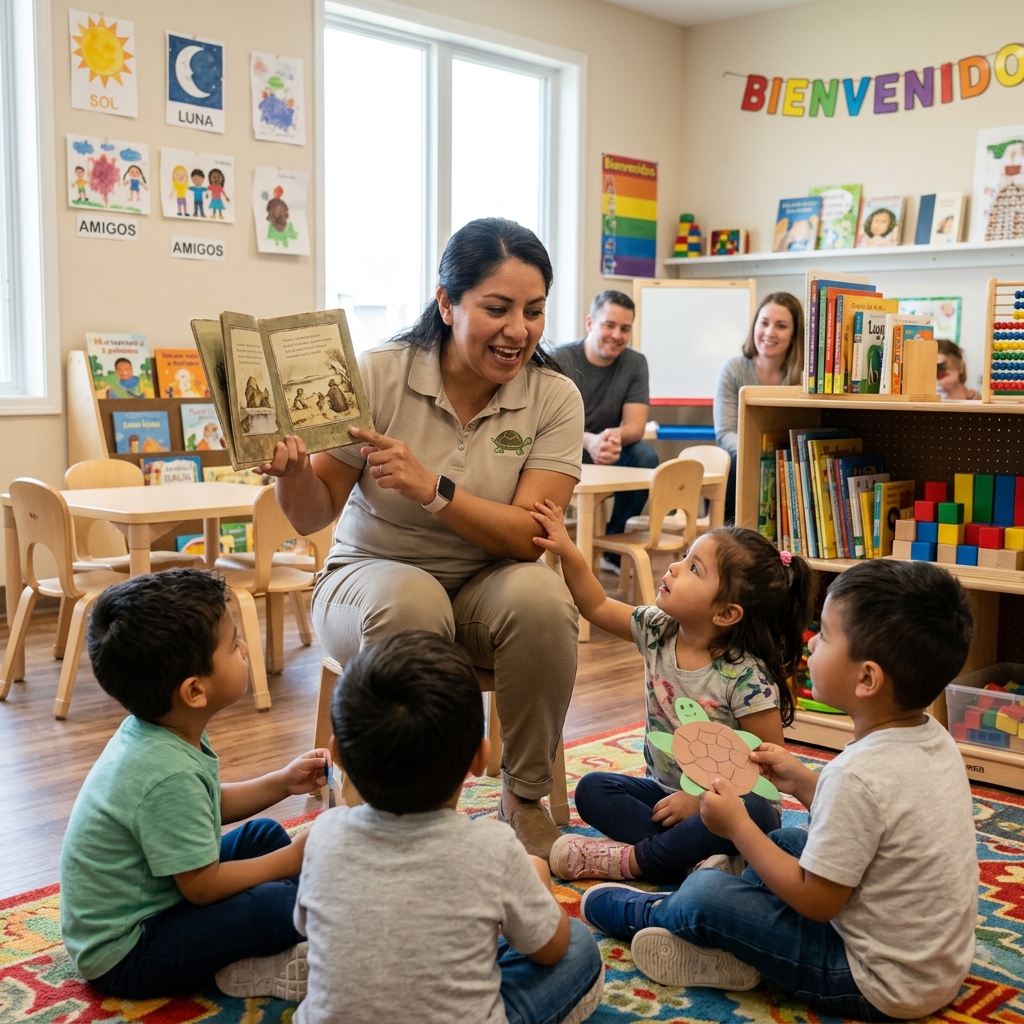
Occasional language classes can’t deliver this. Your child needs consistent input, daily exposure, and caregivers who speak Spanish as a natural language of the environment. That’s what separates Spanish immersion preschool from programs that add language as an extra.
Actionable takeaway: If your current childcare only offers Spanish as a weekly add-on, consider what your child might be missing. Calculate how many actual hours of Spanish exposure matter for real language development. You’ll see the gap immediately, and daily immersion becomes the clear choice for building bilingual skills.
3. How Our Bilingual Staff Makes the Difference
Not every caregiver who speaks Spanish is qualified to teach it to young children. That’s a critical distinction. We staff our center with bilingual professionals who understand child development, early childhood education, and how to support language growth in babies, toddlers, and preschoolers.
Our team members aren’t reading scripts or following a rigid curriculum disconnected from real childhood. They’re trained educators who know how to narrate activities in Spanish naturally, respond to a child’s needs in their native accent, and create conversations that matter. When a child is sad, our staff comforts them in Spanish. When they’re curious, staff members explain things in both languages if needed, always prioritizing the child’s understanding and emotional safety.
This matters because young children learn language through relationship. A caregiver who is truly bilingual and fluent can respond with speed and authenticity. They don’t pause to translate; they simply speak naturally. Children pick up on that fluency. They hear proper grammar, natural rhythm, and cultural context.
We also value cultural knowledge. Speaking a language isn’t just about grammar and vocabulary. It’s about understanding the culture woven into how people communicate. Our staff brings that richness into daily activities—songs, stories, celebrations, and traditions that make Spanish come alive for your child.
Staff continuity matters too. When your child has the same bilingual caregivers day after day, they build deep relationships. Your child learns to trust them, understand their individual style of speaking, and develop language in a consistent environment. We prioritize keeping small teams together so your child experiences stability.
Actionable takeaway: When you visit a Spanish immersion center, ask about staff credentials and bilingual proficiency. Ask how long caregivers have been at the center. If you hear high turnover or vague credentials, that’s a red flag. Our team’s continuity and qualifications are something we’re genuinely proud of—come see for yourself.
4. Safety and Licensing: What Separates Us From the Rest
You don’t compromise on safety, ever. We’re a fully licensed Spanish immersion daycare in Minnesota, which means we meet rigorous health, safety, and staff qualification standards set by the state. That’s not a nice-to-have; it’s foundational.
Licensing means our facility is inspected regularly. It means our staff has background checks, CPR certification, and training in early childhood development. It means we maintain proper adult-to-child ratios, have emergency protocols in place, and keep detailed records of your child’s wellbeing and progress. These aren’t bureaucratic checkboxes—they’re the guardrails that keep your child safe.
Many unlicensed childcare options exist, and some families choose them to save money. But you’re giving up transparency and accountability. Licensed centers like ours are held to documented standards. If something goes wrong, there’s a system of oversight. Our facility is subject to inspection and regulation.
Beyond licensing, we’ve built safety into our culture. We treat every child like our own, which means we’re vigilant about who enters our space, how we supervise, and how we respond to any concern. Parents have open access to communicate with staff, ask questions, and drop by unannounced. That transparency builds trust.
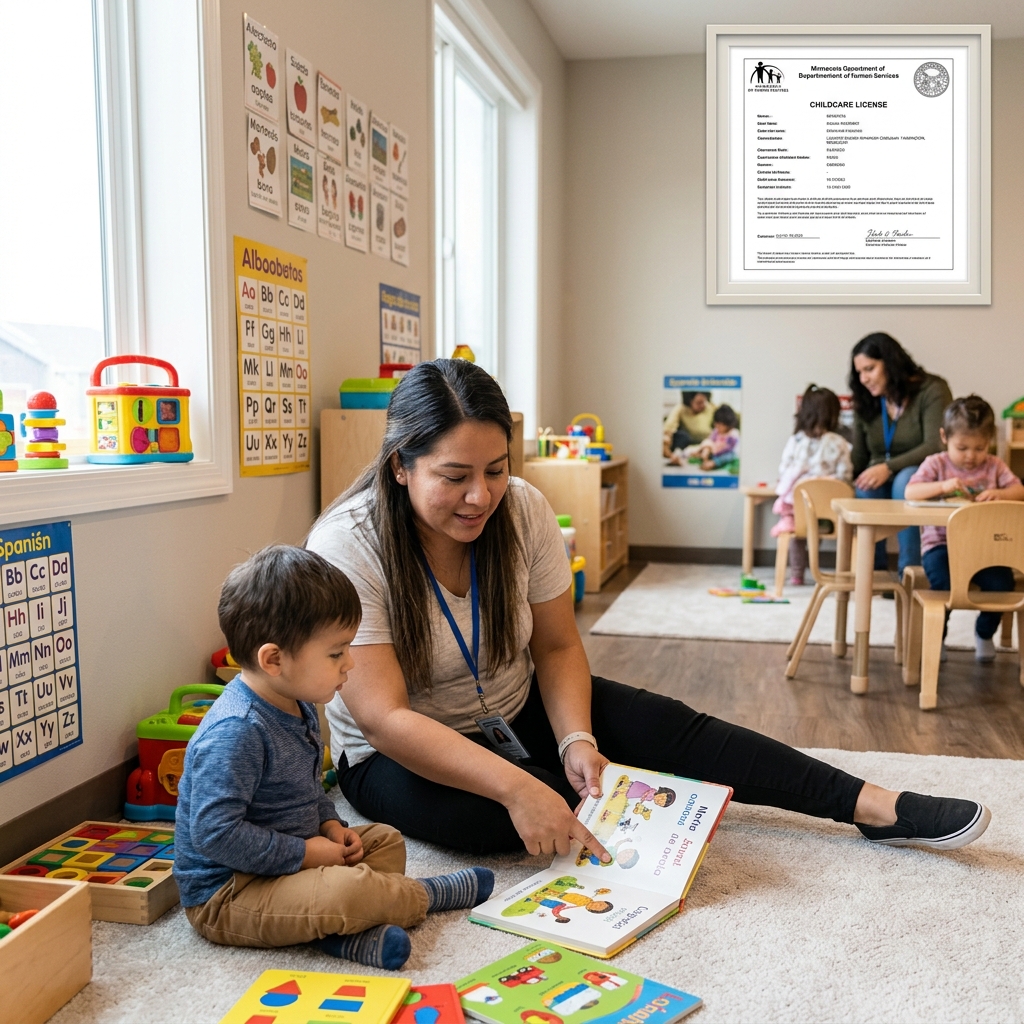
We also maintain secure facilities with controlled entry, appropriate supervision during transitions, and clear emergency procedures. Your child’s safety is our top priority, and we don’t cut corners.
Actionable takeaway: Ask any childcare center to show you their state license and ask about their latest inspection report. Request details on staff qualifications, ratio requirements, and their emergency preparedness plan. We’re proud to share ours openly—it’s part of earning your trust.
5. Small Class Sizes Create Better Learning Outcomes
Walk into a room with 15 toddlers and two caregivers, then walk into a room with eight toddlers and two caregivers. The difference is immediate and profound. Small class sizes aren’t just nicer for parents to think about; they directly affect your child’s learning and experience.
In smaller groups, our staff can notice when your child is curious about something and pause to explore it together. They can respond to individual needs—the child who needs a quiet moment, the one ready to take a risk, the one learning to share. In large groups, caregivers are managing behavior and logistics. In small groups, they’re teaching and connecting.
Research on early childhood education consistently shows that small class sizes lead to better language development, stronger social skills, and more responsive caregiving. Teachers spend less time on classroom management and more time on meaningful interaction. Your child gets more individual attention, more conversation practice, and more opportunities to be heard.
Bilingual development especially benefits from smaller groups. Language learning is conversational. Your child needs back-and-forth interaction, not passive listening to a large group lesson. In a small class, there are more turn-taking opportunities, more one-on-one narration, and more responsive language input.
We intentionally keep our classes small because we believe every child deserves personal attention. That structure costs more to maintain—it means hiring more staff—but it’s foundational to the quality we’re committed to.
Actionable takeaway: Compare class sizes across the centers you’re considering. Ask what the actual adult-to-child ratio is during various parts of the day. Then observe a classroom during play time and count how much individual conversation each child gets. You’ll see the impact small class sizes have on your child’s engagement.
6. School Readiness Through Spanish and English Literacy
Starting kindergarten is a milestone, and your child walks in with advantages if they’ve been in a quality immersion program. We’re intentional about building the literacy skills—in both Spanish and English—that give your child a strong foundation for academic success.
Our Spanish immersion preschool program focuses on pre-literacy skills: print awareness, phonological awareness, letter recognition, and the love of stories. We read books in Spanish daily. We sing songs that highlight rhymes and word patterns. We play with language so your child understands that words are made of sounds, that print carries meaning, and that reading is fun.
By the time your child enters kindergarten, they’ve had thousands of hours of language input. They’re comfortable listening, expressing ideas, and following directions. Many have begun to recognize letters and understand that words can be written down. That’s a powerful head start.
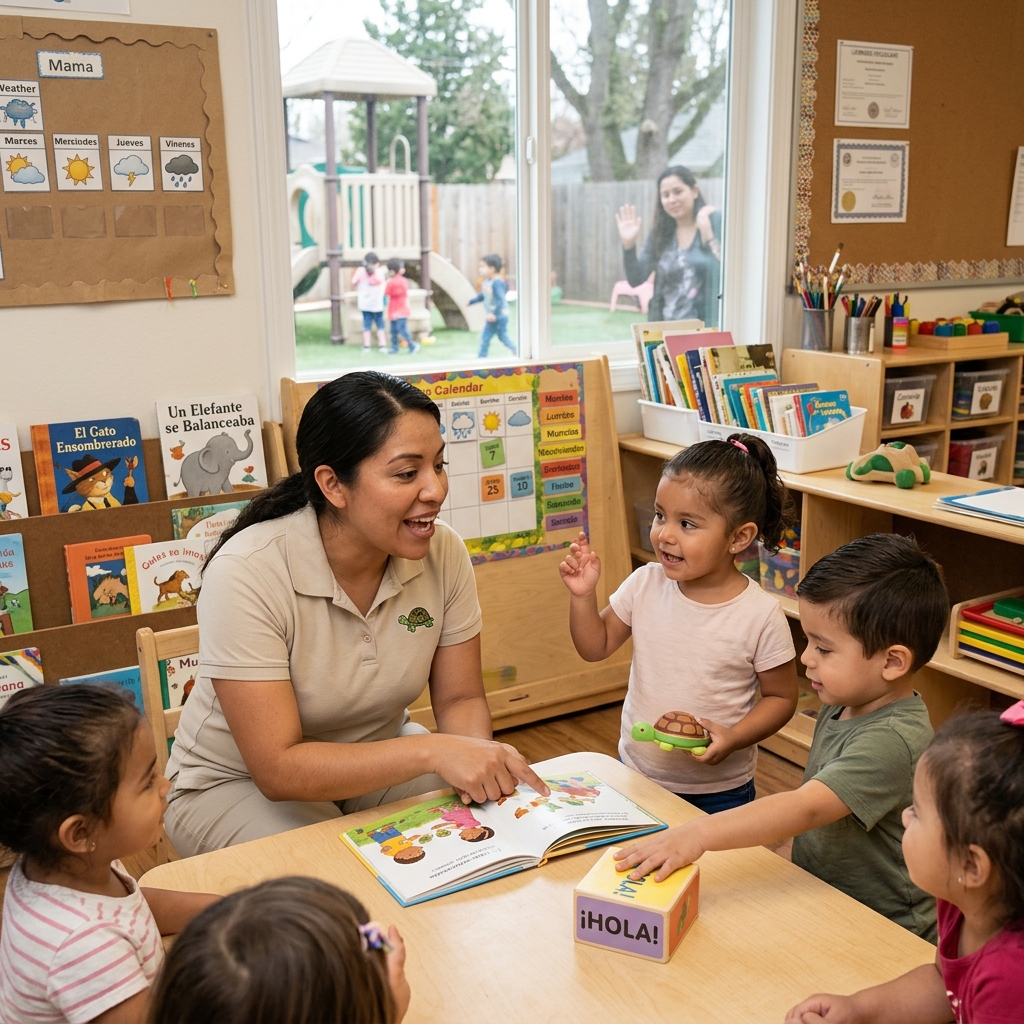
We also ensure that emerging English skills are supported. We don’t neglect English—we balance both languages carefully. Your child hears Spanish as the primary language of learning and care, but they’re exposed to English through songs, stories, and interactions. By kindergarten, they’re ready to thrive in an English-speaking classroom while maintaining their Spanish skills.
Teachers who specialize in early literacy know how to support bilingual development. They understand that bilingual children sometimes code-switch, mixing languages when learning. That’s normal and healthy, not a sign of confusion. Our staff guides this naturally, modeling Spanish use while reassuring your child that both languages are valued.
Actionable takeaway: Ask how any center you’re considering approaches literacy in both languages. Ask what kindergarten readiness looks like for their preschoolers. Request examples of the books, songs, and activities that build language skills. Visit during a read-aloud or music time to see literacy in action.
7. Peace of Mind for Working Parents in Farmington
You’re balancing work, family, and the desire to give your child the best start possible. You need childcare you can trust so you can focus on your job without worry. That’s where we come in.
We partner with your family to create consistency between home and our center. When you communicate about your child’s routines, preferences, and milestones, we build on that knowledge. We send regular updates so you’re never wondering what your child did during the day. We’re accessible, responsive, and genuinely interested in your child’s wellbeing.
Operating with full-time and part-time enrollment options means we fit into your family’s schedule. Whether you need care five days a week, three days, or somewhere in between, we work with you. We’re located conveniently in Farmington and serve families throughout Apple Valley, Lakeville, Eagan, and Rosemount.
The peace of mind comes from knowing your child is in a safe, nurturing environment where they’re learning and growing. It comes from staff who genuinely care, from daily updates and open communication, and from knowing that your child’s development matters as much to us as it does to you. We treat every child like our own.
Many parents tell us they initially worried about the bilingual aspect—would their child be confused? Would they lose English? Those concerns fade within weeks. Families see their children thrive, bring Spanish home, and develop genuine bilingual skills. That shift from worry to confidence is something we help facilitate every single day.
Actionable takeaway: Schedule a tour and bring your questions. Spend time with our staff, see our classrooms, and imagine your child’s day here. Ask about communication, flexibility, and how we partner with working parents. Then ask yourself: do I feel confident? Do I trust these people? That intuition matters.
—
When you’re choosing Spanish immersion childcare for your child, you’re investing in their future. You want a center where bilingual learning is genuine, where safety is non-negotiable, where staff genuinely care, and where your family feels supported.
Mis Tortuguitas is that place. We’re Farmington’s first licensed Spanish immersion daycare, and we’ve earned the trust of families throughout the area because we deliver on what matters: daily immersion in a warm, home-away-from-home environment with qualified bilingual staff, small classes, and genuine partnership with your family.
Come see for yourself. Schedule a tour and experience what families are saying in their reviews. Your child deserves the best start, and we’re here to make it happen.