
Table of Contents
- Why Daycare Safety Should Be Your Top Priority
- Understanding Licensing Requirements for Farmington Childcare Facilities
- What Real Safety Standards Look Like in Daily Operations
- Health and Hygiene Practices That Protect Your Child
- The Role of Qualified Bilingual Staff in Creating Safe Environments
- How Small Class Sizes Enhance Safety and Individual Attention
- Spanish Immersion Learning in a Secure, Nurturing Setting
- Questions to Ask During Your Daycare Facility Tour
- Why Parents Choose Mis Tortuguitas for Peace of Mind
- Schedule Your Tour and See Our Commitment Firsthand
Why Daycare Safety Should Be Your Top Priority
When you’re searching for childcare, your mind goes straight to the hard question: Is my child truly safe there? We get it. Leaving your little one in someone else’s hands for hours each day isn’t something you take lightly, and you shouldn’t have to. At Mis Tortuguitas, we treat every child like our own, and that starts with unwavering safety and cleanliness standards that go beyond what’s required on paper.
This guide walks you through what daycare safety actually means, how licensing protects your child, and what to look for when you’re evaluating a facility. We’ll also share how we maintain the safe, clean, nurturing environment that gives our families peace of mind every single day.
Your child’s safety is our top priority, and it should be the top priority of every childcare facility you consider. The reality is that young children spend a significant portion of their waking hours in daycare. Whether your child is six weeks old or approaching kindergarten, they deserve a space where hazards are minimized, staff are trained, and routines protect their well-being.
Safety in a daycare setting touches every corner of the day: how toys are stored and sanitized, how doors are secured, what happens during emergencies, how staff are screened, and how caregivers respond to tears, bumps, and behavior. It’s the foundation that lets learning, play, and growth happen.
When you choose a facility, you’re choosing peace of mind. You’re choosing to focus on your work without constantly wondering if your child is okay. Parents tell us that knowing their child attends a licensed, well-managed facility with trained bilingual staff allows them to be fully present in their careers and their families. That’s the gift of genuine safety standards: trust.
Action step: Before you tour any facility, write down your specific safety concerns. Are you worried about illness prevention? Emergency procedures? Staff background checks? Having your questions ready helps you evaluate each facility fairly.
Understanding Licensing Requirements for Farmington Childcare Facilities
Minnesota requires all childcare facilities (except license-exempt care in family homes) to be licensed by the Minnesota Department of Human Services. Licensing is your first assurance that a facility meets state health, safety, and staffing standards.
Here’s what licensed facilities must do:
- Complete thorough background checks on all staff, including criminal history and child abuse/neglect registry checks
- Maintain specific adult-to-child ratios based on children’s ages (infants require smaller ratios than preschoolers)
- Pass regular health and safety inspections of the physical space, equipment, and practices
- Ensure all staff members complete required training in first aid, CPR, and child development
- Document and report any incidents or injuries
- Follow strict health policies for illness, medication, and food safety
- Maintain emergency preparedness plans and conduct regular drills
At Mis Tortuguitas, we’re a fully licensed facility serving Farmington, Apple Valley, Lakeville, Eagan, and Rosemount families. We maintain all state requirements and often exceed them because we believe our families deserve more than the minimum standard.
Licensing doesn’t mean perfection, but it does mean accountability and regular oversight. Ask any facility you visit to show you their most recent licensing report. You have the right to see it, and any reputable provider will share it openly.
Action step: Visit the Minnesota Department of Human Services website to look up any facility’s licensing history. You’ll see inspection reports, violations, and corrective actions taken. It’s public information that belongs in your decision-making process.
What Real Safety Standards Look Like in Daily Operations
On paper, safety standards sound simple. In practice, they’re woven into every moment of the day. We’d like to walk you through what that actually looks like at our center.
Before your child even arrives, we’ve already made decisions to keep them safe. Our facility layout has been designed with sight lines that let staff supervise play areas from multiple vantage points. Toys are checked daily for broken pieces, sharp edges, or missing parts that could become choking hazards. Cleaning supplies and medications are locked away. Outdoor play areas are fenced and regularly inspected for hazards.
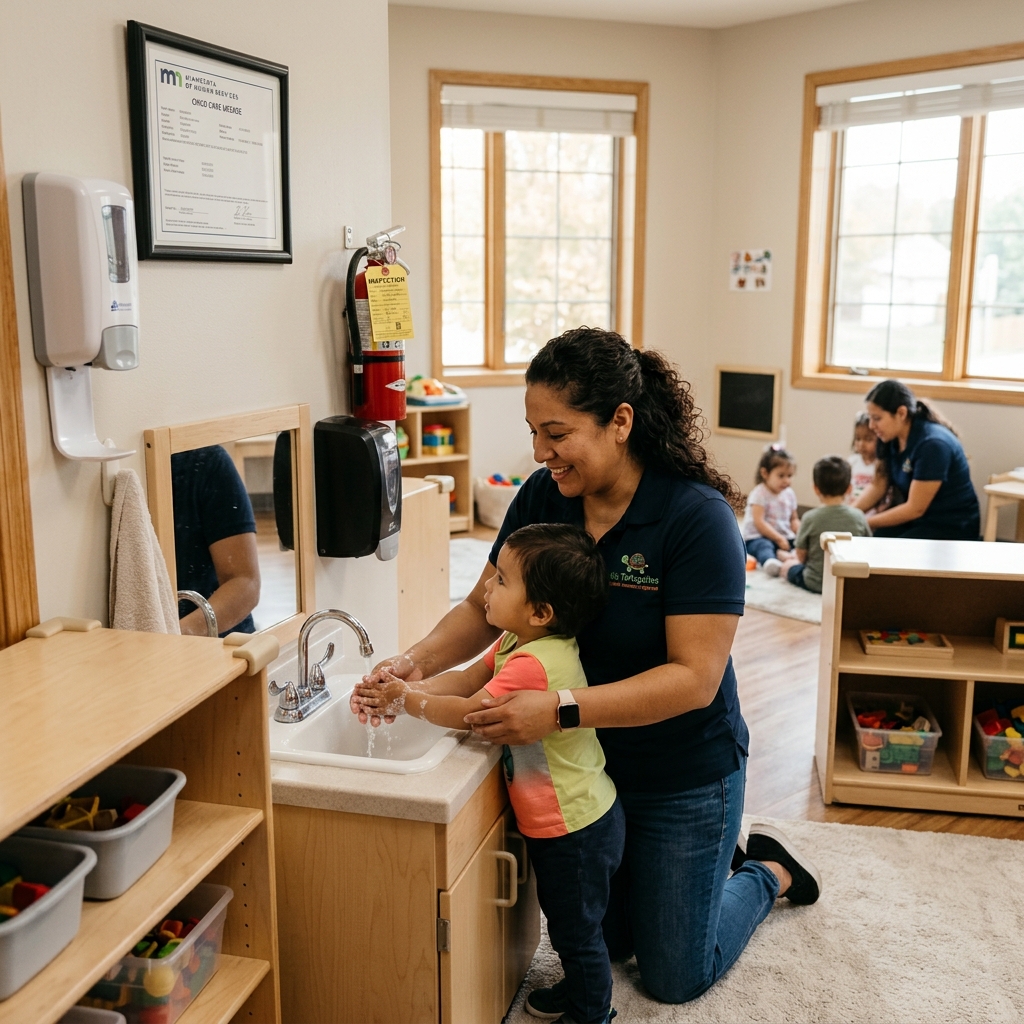
During the day, safety shows up in small, consistent habits. Staff members know every child’s allergies, dietary needs, and any health conditions. Transitions between activities are calm and supervised. Outdoor time happens in organized groups with assigned caregivers. When a child is upset or injured, a staff member responds immediately while another maintains supervision of the group. We use real-time communication systems so parents know what’s happening throughout the day.
We also maintain detailed documentation. Every incident, no matter how small, is recorded and shared with parents. If your child bumps their head during play, you’ll know about it, along with what happened, how we responded, and what we’re watching for. This transparency helps us partner with your family and catch anything that needs attention.
Emergency preparedness is another layer. We practice fire drills, lockdown procedures, and tornado drills regularly (at least monthly). Staff know exactly where to go, how to account for every child, and how to communicate with parents. We have emergency supplies, backup plans, and clear procedures that everyone understands.
Action step: When you tour a facility, ask to see their incident log (sanitized of private details) and ask how they handle common situations like allergic reactions, injuries, or behavioral challenges. Thoughtful, documented responses indicate a safety-minded team.
Health and Hygiene Practices That Protect Your Child
Clean daycare practices are your strongest defense against illness spreading, especially in groups of young children who are still building their immune systems.
We maintain rigorous cleaning schedules that target high-touch surfaces multiple times daily: door handles, light switches, tables, and toys. After meals and snack times, we sanitize surfaces with EPA-approved disinfectants. Bathrooms are cleaned and restocked throughout the day. Our food preparation areas follow strict food safety protocols, and we regularly refresh toys that can’t be fully sanitized.
Handwashing is non-negotiable in our daily rhythm. Staff wash hands with children before meals, after bathroom time, after outdoor play, and after helping a child who’s been sneezing or coughing. We teach children to wash their own hands, making it a playful part of their routine. Hand sanitizer supplements handwashing but doesn’t replace it, and we use it appropriately with children.
Illness policies matter too. We ask families to keep sick children home when they have fevers, diarrhea, or symptoms of contagious illness. We follow Minnesota guidelines for when a child can return to care and what symptoms require staying home. We also screen children upon arrival, checking for visible signs of illness. Some parents worry that illness policies mean their child will be excluded frequently, but these policies actually protect your entire group by preventing outbreaks.
We stay current on recommended vaccines and ask families about their child’s vaccination status. We also partner with families on nutrition, food allergies, and dietary preferences. Our meal planning balances nutrition with variety, and we’re transparent about what children are eating each day.
Diaper changing is another critical hygiene moment. Our staff follow specific protocols: use a clean surface for each diaper change, use gloves when appropriate, dispose of diapers properly, and wash hands immediately after. We track diaper changes and bowel movements for infants and toddlers, noting any changes in health.
Action step: Ask any facility about their specific health protocols for illness, cleaning frequencies, and how they handle diaper changes. Request to see cleaning logs and supply inventories. Detailed, documented practices indicate a health-conscious team.
The Role of Qualified Bilingual Staff in Creating Safe Environments
Safety isn’t just about physical hazards and hygiene, it’s also about emotional safety and being fully understood. When your child is in the care of a qualified bilingual staff member, something important happens: there’s no language barrier between your child’s needs and the caregiver’s response.
Our team members are licensed childcare professionals who are fluent in both Spanish and English. This matters for safety because it means:
- Staff can understand exactly what a child is trying to communicate, even if they’re upset or hurt
- Children feel calmer when spoken to in the language they hear at home
- We can communicate clearly with Spanish-speaking families about health, behavior, and developmental milestones
- Our team models bilingual learning in a natural, immersive way that builds confidence and reduces anxiety in young learners
Beyond language, our staff complete regular training in child development, behavior guidance, emergency response, and health and safety. We prioritize staff who are calm under pressure, who respect each child as an individual, and who see themselves as partners with families rather than just supervisors.
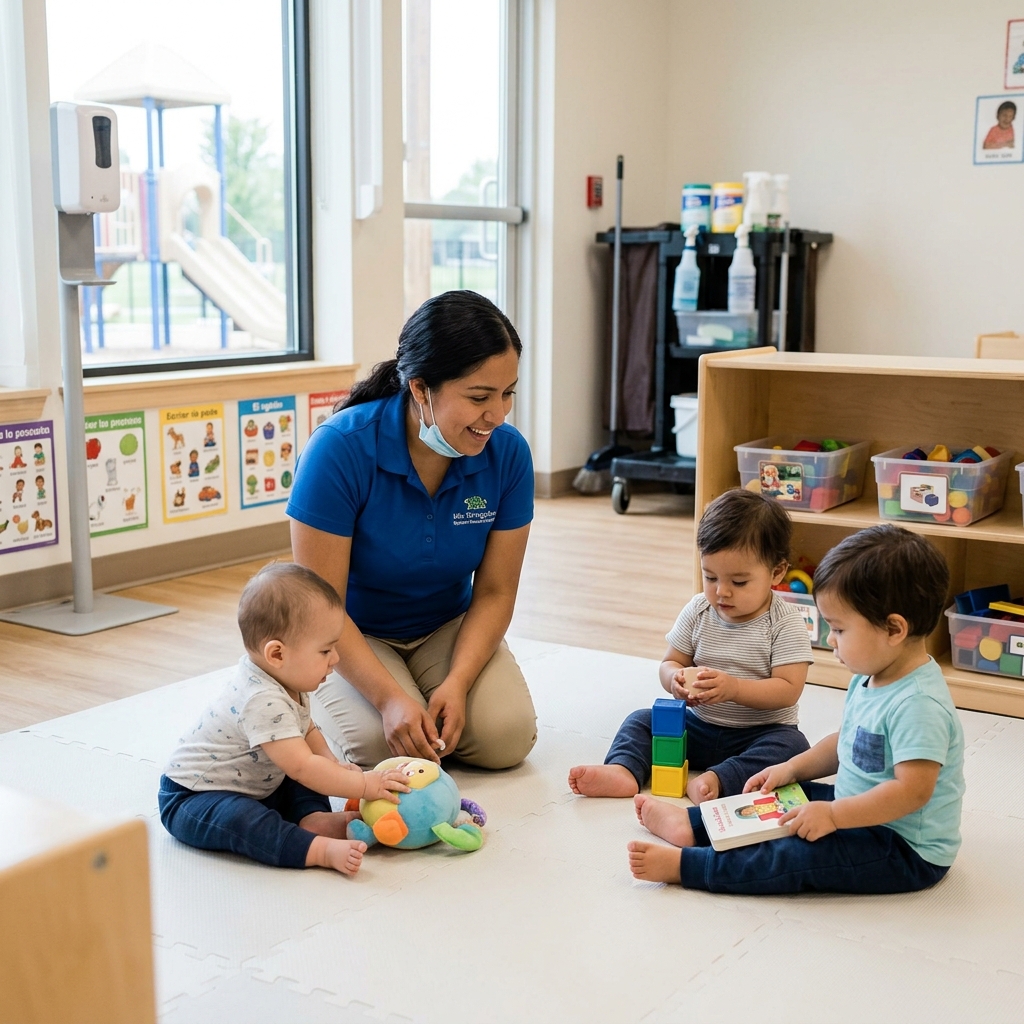
Staff stability also matters for safety. Children thrive when they form secure attachments with caregivers who know them deeply. We work to maintain consistent staff assignments so your child knows who to trust and feels secure in their daily routine.
Action step: When you visit a facility, observe how staff interact with children. Do they get down to a child’s eye level? Do they respond warmly to questions? Do they seem to know each child’s preferences and needs? These are signs of a team that’s invested in your child’s well-being.
How Small Class Sizes Enhance Safety and Individual Attention
One of the most powerful safety features in any daycare is manageable class size. Small class sizes mean more eyes on each child, deeper relationships between caregivers and children, and the ability to respond quickly to individual needs.
Minnesota regulations set minimum ratios for different age groups. For example, infant care requires one caregiver for every four infants. Toddler care allows one caregiver per six children. Preschool classrooms can have one caregiver per ten children. These ratios are non-negotiable minimums that keep adults from being overwhelmed.
We keep our class sizes intentionally small, well within state requirements. This means your child receives more individual attention, staff members can genuinely know each child’s personality and needs, and it’s easier to notice if something seems off. A child who’s coming down with an illness, struggling emotionally, or needing extra reassurance gets noticed faster in a smaller group.
Small class sizes also support better behavior guidance and conflict resolution. Instead of a caregiver managing a chaotic group, they can sit with two children who are having a disagreement and help them work through it. They can spend one-on-one time with a child who’s having a tough day. They can celebrate successes and milestones with genuine enthusiasm.
For families, smaller groups also mean more consistent communication. Your child’s caregiver actually has time to chat with you at pickup about their day, their mood, and what they learned. You’re not getting rushed notes or generic updates.
Action step: Ask about class size and adult-to-child ratios during your tour. Ask how staff manage transitions and whether they have assigned key caregivers for each child. These details reveal whether the facility prioritizes individual attention.
Spanish Immersion Learning in a Secure, Nurturing Setting
You might wonder if daily Spanish immersion adds complexity or stress to your child’s daycare experience. It actually does the opposite. When bilingual education happens in a calm, secure, play-based environment with qualified teachers, it becomes a natural, joyful part of your child’s day.
At Mis Tortuguitas, our infant program through preschool experience Spanish immersion within a warm, home-away-from-home setting. Children learn Spanish through play, songs, stories, and daily interactions with bilingual staff who speak Spanish naturally throughout the day. There’s no pressure, testing, or rigid instruction. Instead, children absorb language the way they would at home, surrounded by people who use it authentically.
This immersive approach actually reduces anxiety in young learners. When a child hears Spanish consistently from trusted caregivers, it becomes familiar and safe rather than confusing. By the time they reach kindergarten, they’ve built a strong foundation in two languages and the cognitive benefits that come with bilingualism.
Security and language development go hand in hand. A child who feels emotionally safe is more open to learning and trying new things, including a new language. Our focus on small class sizes, consistent caregivers, and a nurturing environment creates the conditions where language learning flourishes naturally.
Action step: If bilingual learning is important to your family, ask any facility how they implement Spanish instruction. Are teachers fluent or learning themselves? Is Spanish woven throughout the day or compartmentalized into lessons? Is it joyful and pressure-free? These questions help you find a true immersion program.
Questions to Ask During Your Daycare Facility Tour
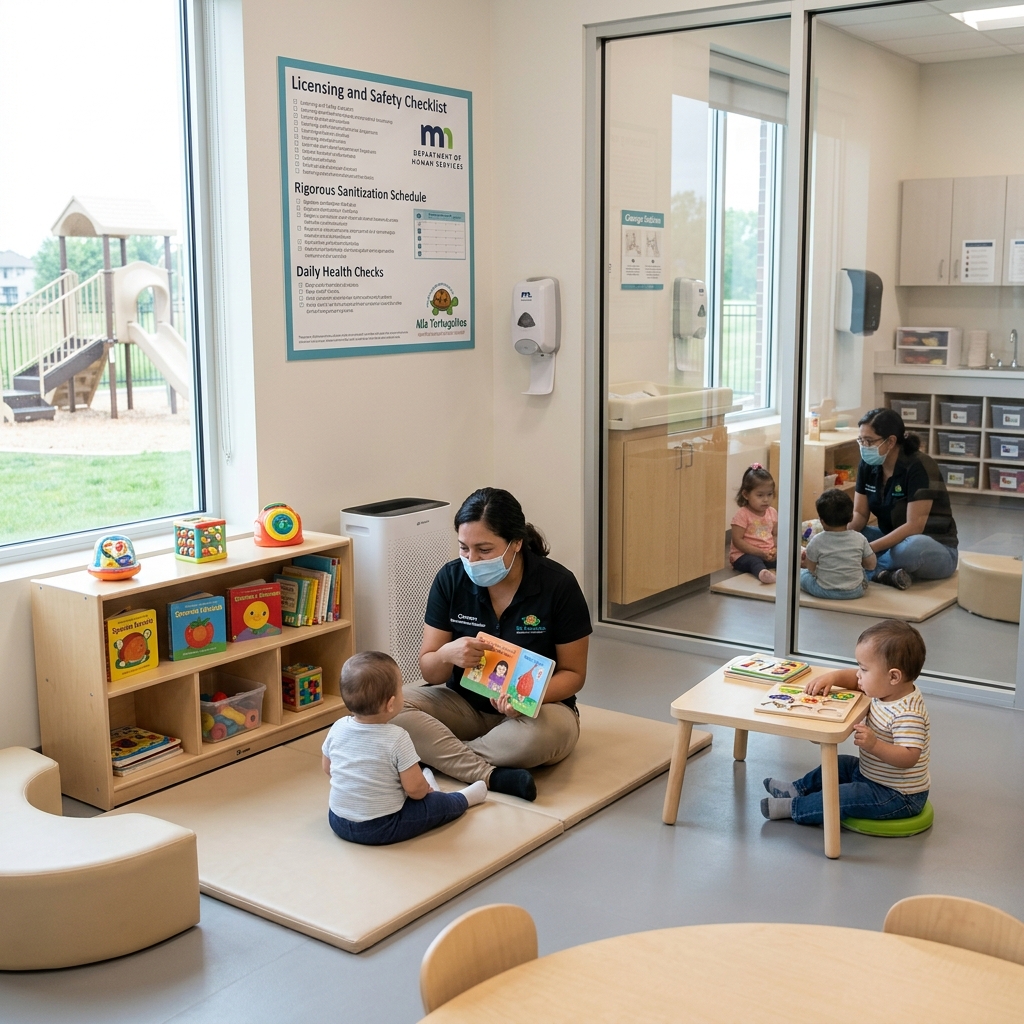
A facility tour is your chance to see safety and cleanliness standards in action. Go beyond the surface appearance and ask questions that get at how a facility actually operates day-to-day. Here are some of our recommended questions:
On staffing and training:
- How long do staff members typically stay at your facility?
- What’s your approach to staff training? How often?
- Can you walk me through your hiring and background check process?
- How many staff members have bilingual qualifications?
On health and safety:
- What’s your illness policy? When should I keep my child home?
- How do you handle medication administration?
- Can you show me your cleaning logs and schedules?
- How often are toys and equipment sanitized?
- Walk me through a diaper change. What’s your process?
On ratios and supervision:
- What are your actual child-to-staff ratios in each classroom?
- How do you maintain supervision during transitions?
- What happens during outdoor time?
- Who supervises when a teacher takes a break?
On daily communication and partnerships:
- How do you communicate with parents throughout the day?
- What happens if my child is injured or upset?
- How do you handle behavior challenges?
- Can I observe a classroom during the day?
On emergency preparedness:
- Can you walk me through your emergency procedures?
- When was your most recent fire drill? Lockdown drill?
- Do you have a backup plan for staff absences?
- What’s your communication plan if there’s an incident?
Take notes, trust your gut, and don’t hesitate to ask follow-up questions. A good facility will answer thoroughly and invite you to come back.
Action step: Before your tour, email your list of questions so the director can prepare thoughtful answers. Ask to observe a classroom for 20-30 minutes during the day. Seeing real interactions is worth more than a polished presentation.
Why Parents Choose Mis Tortuguitas for Peace of Mind
We’re proud to serve Farmington, Apple Valley, Lakeville, Eagan, and Rosemount families because we understand what matters most to you. You want your child to be safe, clean, and thriving. You want staff who genuinely care and communicate openly. You want a facility where your child feels secure enough to explore, play, and learn.
Parents choose us because they see that commitment the moment they walk through our doors. Our staff know children by name, remember their favorite songs, and celebrate their milestones. Our facility is bright, welcoming, and thoughtfully organized to support safe, joyful learning. Our licensing record is clean, our practices are transparent, and we’re always looking for ways to go beyond standard requirements.
We also understand the added value of bilingual education. Spanish immersion isn’t an afterthought at our center, it’s woven through everything we do. Your child builds language skills, cultural awareness, and cognitive advantages through daily, natural exposure to Spanish and English. It’s a gift that starts early and lasts a lifetime.
The safety and cleanliness practices we’ve described in this guide aren’t marketing talking points for us, they’re lived values. We partner with your family because we know that raising a child takes a village, and we’re honored to be part of yours.
Action step: Schedule a tour and experience our warm, secure environment firsthand. Come see for yourself why families in our area trust us with their children.
Schedule Your Tour and See Our Commitment Firsthand
If you’re looking for a safe, clean, licensed daycare where your child receives excellent care and begins building bilingual skills, we’d love to meet you and your family. A tour gives you a real sense of our space, our people, and our commitment to your child’s well-being.
When you visit, you’ll see our classrooms in action, meet our bilingual staff, and ask any questions that matter to you. We’re transparent about our practices and proud to show families what we do every day.
Reach out today to schedule your tour at Mis Tortuguitas. Your child’s safety and growth are worth the time, and we’re confident you’ll feel the same warmth and security when you see our center that our families experience every day.