
Table of Contents
- The Challenge: Finding Childcare Where Your Child Actually Thrives
- What Makes Bilingual Staffing Different from Standard Daycare
- Our Commitment to Qualified Bilingual Teachers
- How Proper Teacher-to-Child Ratios Impact Learning
- Small Class Sizes Mean More Individual Attention
- Why Both Bilingual Skills and Childcare Expertise Matter
- Creating a Safe, Language-Rich Environment Together
- What to Look for in a Bilingual Daycare Program
- Meet Our Experienced Teaching Team
- How Our Ratios Support School Readiness and Literacy
- Schedule Your Tour to See Our Team in Action
The Challenge: Finding Childcare Where Your Child Actually Thrives
You’re looking for more than just a place to drop off your child each morning. You want a space where your little one feels secure, engaged, and genuinely cared for—somewhere that supports their growth while giving you peace of mind as a busy parent.
The reality? Not all daycare programs are built the same. Standard childcare facilities often focus on supervision and basic care, which matters, but they don’t always prioritize the deeper learning and developmental support your child deserves. And if you’re hoping to raise a bilingual child, finding a center with truly qualified Spanish-speaking staff becomes even harder to find in the Farmington area.
Here’s what many parents discover: when staffing levels are stretched thin or teachers lack formal training in both bilingual education and early childhood development, children miss out. They get less one-on-one interaction, fewer chances to practice language naturally, and fewer individualized moments where a caregiver notices what they’re ready to learn next.
We understand this worry because we hear it from families every week. That’s why we built Mis Tortuguitas differently. Our bilingual staff and careful attention to teacher-to-child ratios aren’t nice-to-haves; they’re the foundation of everything we do.
What Makes Bilingual Staffing Different from Standard Daycare
A bilingual caregiver brings something that a monolingual staff member simply cannot: fluency in two languages combined with the ability to model code-switching naturally throughout the day.
In a standard daycare, Spanish might come from a once-a-week lesson or a single staff member who isn’t present every day. Your child hears disconnected words and phrases. In a true Spanish immersion setting, our entire team thinks, speaks, and interacts in Spanish during our immersion windows. Children hear language in real, meaningful contexts: “Vamos a lavar las manos” (Let’s wash our hands) isn’t a lesson; it’s part of the daily rhythm.
Beyond language, bilingual educators understand the cognitive and cultural landscape their students are navigating. They recognize when a child is code-switching as a normal part of bilingual development, not a sign of confusion. They know how to scaffold language learning so children feel confident trying new words. They can connect lessons to the cultural backgrounds their families represent.
Standard childcare staff, even wonderful ones, may not have this specialized training. They might interpret a child’s quiet behavior as shyness rather than recognizing it as a phase of language acquisition. They may not know how to encourage Spanish use or respond when parents ask about bilingual milestones.
Our team goes deeper. Every educator on our staff holds bilingual credentials and early childhood training. They understand child development through a bilingual lens, which changes everything about how they interact with your child.
Our Commitment to Qualified Bilingual Teachers
We treat every child like our own, which is why we’re intentional about who joins our teaching team.
Every educator at Mis Tortuguitas is licensed and holds credentials in both early childhood education and bilingual instruction. We don’t hire someone because they speak Spanish; we hire them because they’re trained educators who are fluent in Spanish and deeply understand how young children learn language.
Here’s what that looks like in practice:
- Continuous bilingual training. Our team attends regular professional development on Spanish immersion methodology, second language acquisition, and literacy development in both English and Spanish.
- Passion for cultural connection. Our teachers aren’t just delivering curriculum; they’re building relationships and helping children see themselves reflected in the learning environment.
- Collaborative approach with families. We partner with your family to understand your child’s language background, family goals, and any concerns. This partnership makes the real difference.
- Small team, consistent care. Because we keep class sizes intentionally small, your child works with the same educators day after day. That consistency builds trust and deeper understanding of your child’s needs.
When you choose Mis Tortuguitas, you’re not just choosing a daycare program. You’re choosing a team of educators who have made bilingual early childhood development their professional commitment.
How Proper Teacher-to-Child Ratios Impact Learning
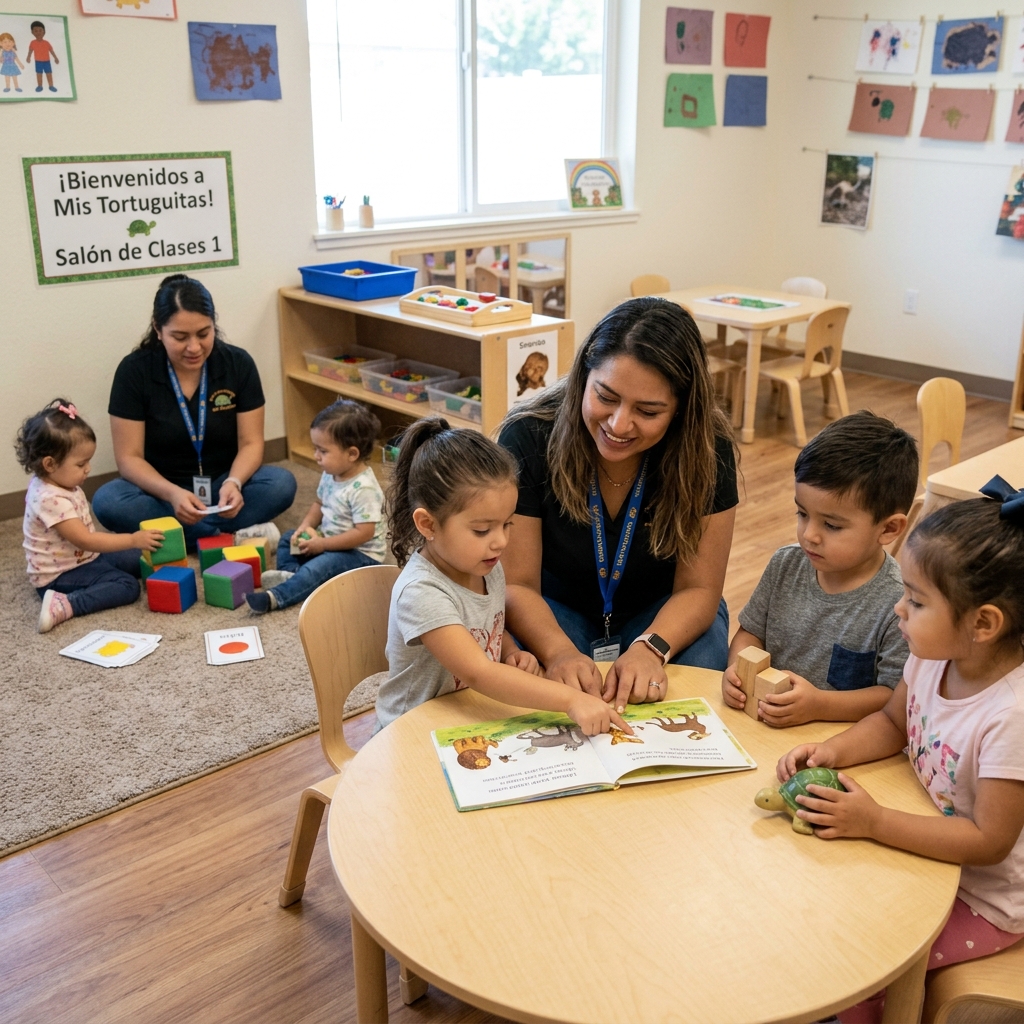
Here’s something you might not realize: the number of children per adult dramatically changes what a child’s day actually looks like.
In a classroom with a 1:8 or 1:10 ratio (which is legal but not ideal), a teacher is managing behavior, transitions, and basic needs for most of the day. There’s little time for back-and-forth conversation, individual observation, or responding to each child’s unique interests.
In a properly staffed classroom with lower ratios, something different happens. A teacher notices that Maya is building with blocks and adds language: “Estás haciendo una torre muy alta” (You’re making a very tall tower). She listens as Maya responds, adjusts her language complexity based on what she hears, and extends the learning moment. This interaction lasts maybe two minutes, but it’s precisely the kind of responsive, language-rich moment that builds bilingual literacy skills.
With our teacher-to-child ratios, your child gets:
- Real conversations, not just instructions. More time for your child to initiate language and be truly heard.
- Individualized observation. Teachers notice what your child is interested in, what words they’re experimenting with, and where they need support.
- Faster response to needs. A child who’s frustrated gets comfort quickly. A child who’s ready for a new challenge gets it.
- Intentional transitions. Rather than rushing children through the day, we have time to make each transition part of the learning experience.
The research is clear: children in lower-ratio settings show better language development, more secure attachment, and higher engagement with learning activities. For a bilingual program specifically, this matters even more. Your child needs a responsive adult who can notice when they’re ready to try a new word and celebrate that effort.
Small Class Sizes Mean More Individual Attention
When we decided on our classroom sizes at Mis Tortuguitas, we didn’t just look at what the state allowed. We asked: what size feels right for our children and our educators?
Smaller classes mean your child isn’t one of fifteen faces the teacher is trying to remember. Your child is known, individually seen, and genuinely supported.
In a small class, a teacher can:
- Tailor language input. If one child is more verbal and another is observing quietly, the teacher can adjust her approach for each child’s learning style.
- Notice developmental milestones. Did your toddler just use a new verb tense? A teacher with only six children instead of twelve catches that moment and celebrates it.
- Respond emotionally. When your child has a rough morning or a big emotion, there’s an adult with enough capacity to sit with them and help.
- Build relationships with your family. We genuinely have time to chat at pickup, share observations, and partner with you on your child’s growth.
The difference is palpable. Parents tell us they can see it in their children’s faces at pickup: calm, engaged, happy. That’s what happens when a child gets enough adult attention and responsive care.
Why Both Bilingual Skills and Childcare Expertise Matter
Here’s a truth we’ve learned: being bilingual and being a skilled early childhood educator are two separate skill sets, and your child needs both.
Imagine a fluent Spanish speaker without formal training in early childhood education. They might speak beautiful Spanish, but they may not know how to scaffold language for a two-year-old, recognize signs of hearing concerns, or respond to developmental challenges with evidence-based strategies. They might not understand how to balance free play with intentional learning or create a classroom environment that supports bilingual literacy.
On the flip side, a highly trained early childhood educator who speaks only English can create wonderful learning moments, but they can’t provide Spanish immersion or model bilingual thinking.
We needed both. Our team members are trained educators first. They hold credentials in early childhood development, child psychology, and classroom management. They’ve studied literacy acquisition, social-emotional learning, and inclusive practices. And they happen to be native or near-native Spanish speakers who bring cultural fluency to everything they do.
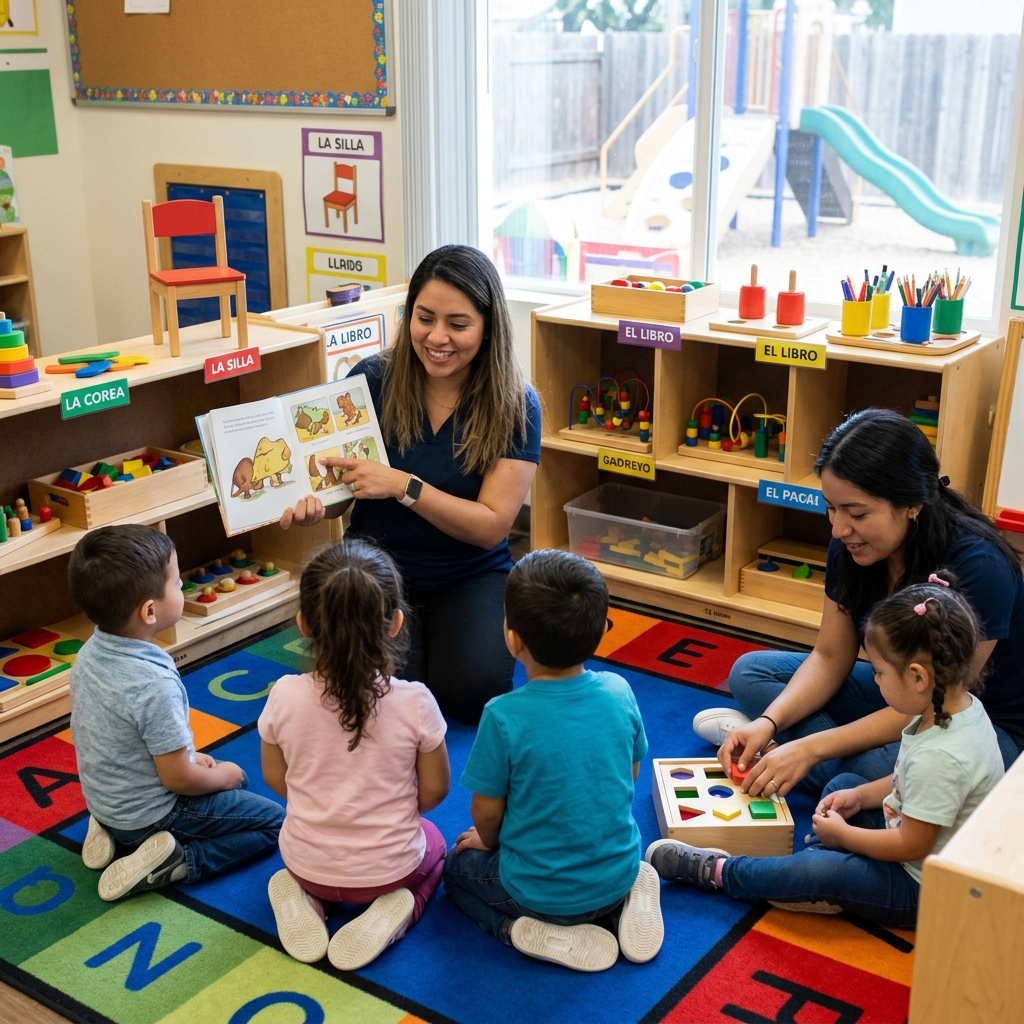
This combination creates an environment where:
- Your child’s Spanish development is supported by someone who understands second language acquisition theory.
- Your child’s overall development (social, emotional, cognitive, physical) is guided by someone with deep training.
- Your child experiences teaching that’s both culturally responsive and developmentally appropriate.
When both skill sets are present, your child thrives. It’s that simple.
Creating a Safe, Language-Rich Environment Together
Safety and language immersion aren’t separate goals; they’re connected.
Your child can’t fully engage in learning if they don’t feel secure. And they can’t fully develop language skills if they’re not in a warm, responsive relationship with their caregivers. We design our environment and routines with both in mind.
A language-rich environment means:
- Spanish during natural routines. “Hora de comer” (Mealtime) isn’t just eating; it’s narrating actions, naming foods, and practicing conversation. This happens because we have staff who can engage meaningfully in Spanish.
- Books, songs, and stories in Spanish. Our library is intentionally curated. Children hear stories read with expression and rhythm, building phonological awareness and comprehension.
- Bilingual play and exploration. When children build, paint, explore outdoors, our educators are there narrating in Spanish, asking questions, and expanding their language.
- Visual supports throughout. Labels, pictures, and color-coded areas help children understand routines while they’re absorbing Spanish vocabulary.
A safe environment means:
- Known caregivers. Your child works with the same team members consistently. Relationships build security.
- Clear, predictable routines. When children know what comes next, they relax. A relaxed child is a learning child.
- Responsive care. If your child is scared or upset, an adult comes. They’re not ignored or rushed.
- Secure facilities and careful protocols. We’re licensed, we follow all safety standards, and we treat your child’s physical safety as non-negotiable.
We partner with your family to strengthen both. At pickup and through regular communication, we share what we’re noticing about your child’s growth, answer your questions, and listen to your observations. This partnership helps us create continuity between home and our center.
What to Look for in a Bilingual Daycare Program
If you’re evaluating bilingual childcare options, here are concrete questions to ask:
About staffing:
- Are all staff members fluent in Spanish, or just a few?
- Do teachers hold formal credentials in both early childhood and bilingual education?
- Is there turnover, or is the team stable?
- How do they continue training in bilingual methodology?
About ratios:
- What’s the actual teacher-to-child ratio in each classroom? (Ask to see it in writing; legal minimums aren’t always ideal.)
- How many children are in each class?
- Does the ratio change during transitions or meals?
About language immersion:
- When does Spanish actually happen? (All day? Part of the day? Only during certain activities?)
- Is Spanish integrated into daily routines, or compartmentalized into lessons?
- How do they support children who are new to Spanish?
About assessment and communication:
- How do they track language development?
- Do they communicate regularly with families about their child’s progress?
- Can they talk specifically about bilingual development, not just general milestones?
About the environment:
- Can you visit during the day? (Good programs welcome observations.)
- Do you see children engaged and talking?
- Does the space feel warm and intentionally designed?
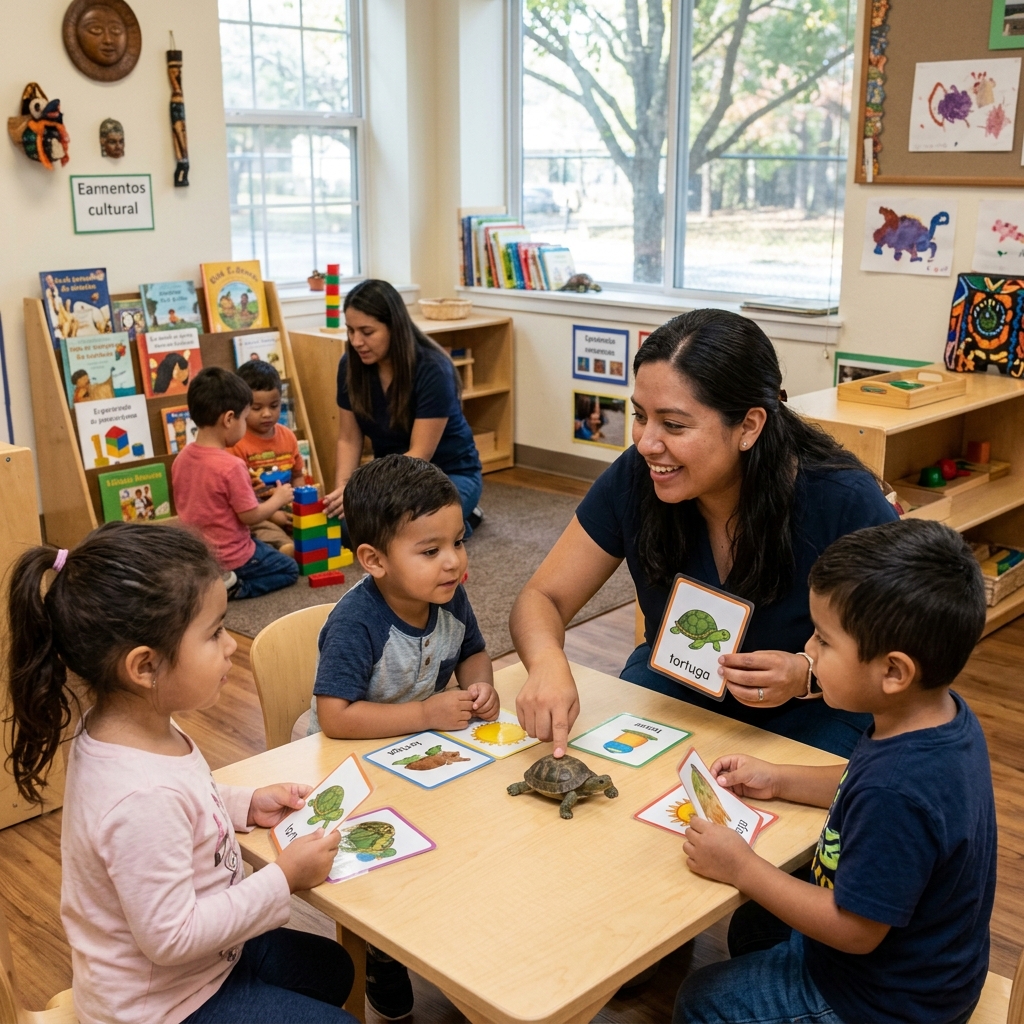
The program you choose should be able to answer these questions clearly and with confidence.
Meet Our Experienced Teaching Team
Our educators are the heart of Mis Tortuguitas. Each team member brings years of experience, advanced training, and genuine love for working with young children.
Our lead teachers in the infant and toddler rooms are bilingual specialists trained in attachment-based care and early language development. They understand that the first three years are critical for both emotional security and language foundations. They create individualized routines, respond to each baby’s communication attempts, and keep detailed observations that help families understand their child’s growing abilities.
In our preschool program, our educators are focused on Spanish immersion preschool that builds school readiness. They integrate literacy skills in both Spanish and English, support social-emotional growth through play-based learning, and get to know each child as a unique learner. Many of our preschool teachers have been with us for several years, which means they know your child, your family, and your goals.
Every team member participates in ongoing training, celebrates each child’s progress, and genuinely believes that every child can succeed. When you visit, you’ll meet them, see how they interact with children, and feel the warmth they bring to their work.
How Our Ratios Support School Readiness and Literacy
One of the biggest benefits of our careful attention to teacher-to-child ratios is how directly it supports school readiness and early literacy.
School readiness isn’t just about knowing letters and numbers. It includes self-regulation (can your child sit and focus?), social skills (can they play cooperatively?), language skills (can they express needs and follow directions?), and emotional security (do they feel confident trying new things?).
With our ratios, teachers have time to intentionally build these skills:
- Self-regulation through routines. When there are enough adults, we can practice transitions calmly, help children manage big emotions, and celebrate their growing ability to wait or cooperate. These are school readiness skills.
- Phonological awareness through play. We’re not drilling sounds; we’re reading rhyming books, playing word games, and narrating daily activities in Spanish. A teacher with more breathing room can do this throughout the day.
- Vocabulary building through conversation. Literacy starts with rich oral language. Your child needs lots of exposure to varied vocabulary in natural, conversational contexts. Our ratios allow this.
- Confidence in communication. When a child’s words are heard and valued by a responsive adult, they grow more confident trying new words and expressing ideas. This confidence carries into school.
By the time your child enters kindergarten, they’ll have had years of responsive, language-rich care in Spanish. This gives them a head start academically, socially, and emotionally.
Schedule Your Tour to See Our Team in Action
The best way to understand what Mis Tortuguitas offers is to visit. Come see our classrooms during the day. Watch how our educators interact with children. Notice the warmth, the intentionality, the genuine joy in the space.
You’ll meet our team, tour our facilities, and get a real sense of what your child’s day would look like. We’ll answer your questions about Spanish immersion, bilingual development, school readiness, and how we partner with families. And you’ll leave with clarity about whether we’re the right fit for your family.
Your child’s safety is our top priority. We’re licensed, we maintain careful ratios, and we’re committed to qualified, caring staff. But beyond the credentials and protocols, you’ll feel something deeper: that we treat every child like our own.
Ready to explore how we can support your child’s bilingual journey? Reach out to schedule a tour. We’d love to meet you and show you why families across Farmington, Apple Valley, Lakeville, Eagan, and Rosemount trust us with their children’s care and early learning.
Contact us today. Come see for yourself.